
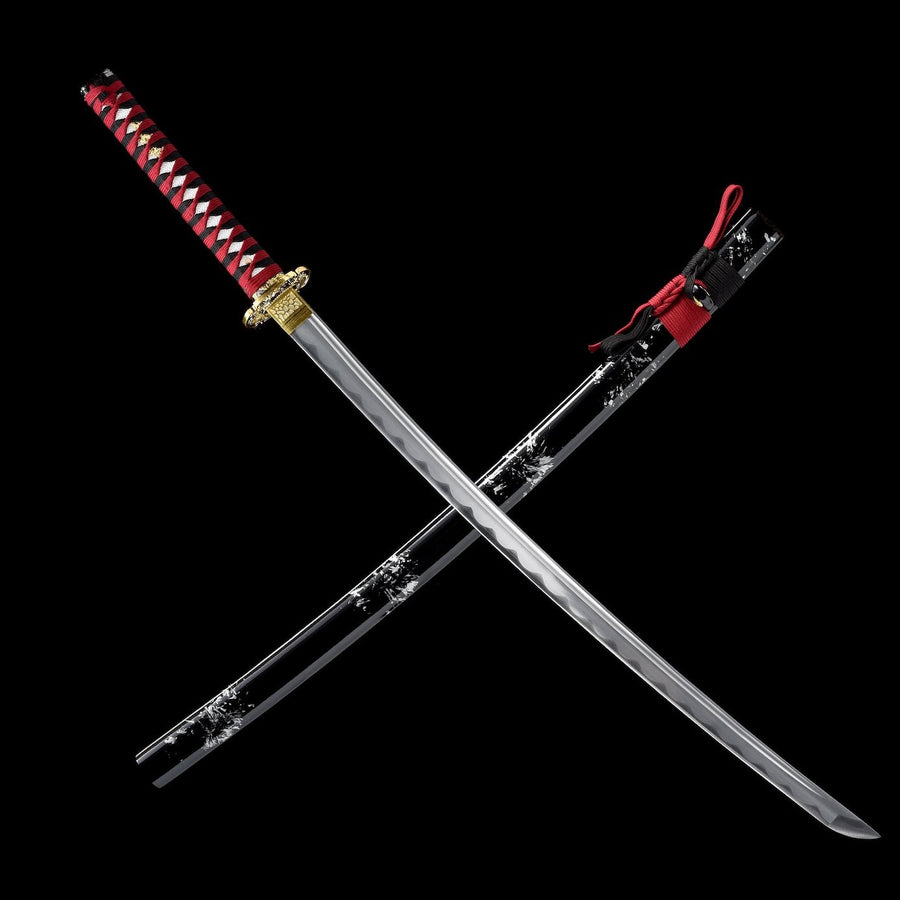
The katana is more than just a weapon; it is an embodiment of tradition, a symbol of the samurai spirit, and a masterpiece of Japanese craftsmanship. Its gracefully curved blade, sharp edge, and intricate fittings represent centuries of refinement. For collectors and martial arts enthusiasts, the katana sword is a piece of living history, a narrative forged in fire and steel. But have you ever wondered how long it takes to create one of these legendary Japanese swords?
This article will guide you through the meticulous and time-consuming process of forging a masterwork katana, from selecting the raw steel to the final polish. Understanding this journey reveals why the samurai sword is so revered and why its creation is a true art form.
A Legacy Forged in Time: The Katana’s History
The story of the katana begins long before the samurai class rose to prominence. Early Japanese swords were straight-bladed, influenced by Chinese and Korean designs. However, around the Heian period (794-1185), swordsmiths began experimenting with curved blades, which were better suited for combat on horseback. This innovation marked the birth of the tachi, the predecessor to the katana.
Over the centuries, especially during the Kamakura period (1185-1333), sword-making techniques were perfected. The Mongol invasions of Japan tested the mettle of these blades, leading to further refinements in their construction. It was during this era that the iconic combination of a hard edge and a softer, more flexible spine was developed, giving the Japanese sword its legendary strength and resilience. The katana as we know it today, worn with the edge facing upwards through the belt, became popular during the Muromachi period (1336-1573).
The Soul of the Sword: Raw Materials
The creation of an authentic samurai katana sword starts with a special type of steel known as tamahagane (玉鋼), or “jewel steel.” This is not just any steel; it is produced in a traditional clay smelter called a tatara.
- Tamahagane Steel: Smelted from iron sand (satetsu) and charcoal, tamahaganeis a complex steel with varying carbon content. The swordsmith must carefully select pieces with the right properties for different parts of the blade.
- Charcoal: Pine charcoal is used in the forge. It burns cleanly and allows the smith to precisely control the temperature of the fire, a crucial element in forging high-quality steel.
- Clay, Ash, and Water: A special mixture of clay, charcoal powder, and polishing stone powder is applied to the blade during the heat-treatment process. This is what creates the distinct temper line, or hamon.
The quality of these raw materials is paramount. A master swordsmith, or tosho, understands that the soul of the katana is born from the earth itself.
The Forging Process: A Step-by-Step Timeline
Creating a masterwork katana is a painstaking process that can take months, sometimes even over a year, to complete. Each stage requires immense skill, patience, and dedication.
1. Preparing the Steel: The Birth of Tamahagane (1-2 weeks)
The journey begins with the tatara furnace, where iron sand and charcoal are heated for three days and three nights. This intense process produces a large bloom of steel called a kera. Once cooled, the kera is broken apart, and the pieces of tamahagane are sorted by carbon content. Only the best, most consistent pieces are chosen for making a katana.
2. Forging and Folding: Purifying the Steel (1-2 weeks)
The selected tamahagane is heated, hammered into a flat block, and then folded upon itself. This folding process is repeated anywhere from 8 to 16 times, creating thousands of individual layers. This crucial step serves two purposes: it removes impurities from the steel and evenly distributes the carbon content, resulting in a homogenous yet incredibly tough material. The layered structure is what gives the jihada (surface grain) its unique and beautiful pattern.
3. Shaping the Blade: The Sunobe (1 week)
Once the steel is purified, the smith begins to shape the blade. The block of steel is carefully hammered out into a long bar called a sunobe. During this stage, the smith defines the blade’s final length, width, and distinctive curve (sori). The tip of the sword, the kissaki, is also formed at this time. This requires an expert eye and a steady hand, as the blade’s geometry is critical to its performance.
4. Heat Treatment: The Fiery Baptism (1 day, but immense skill)
Differential hardening, or yaki-ire, is perhaps the most critical and dramatic stage. The blade is coated with a special clay mixture—thicker along the spine and thinner along the edge. When the blade is heated to the precise temperature and then quenched in water, the thin-coated edge cools rapidly to form hard martensite steel, while the thicker-coated spine cools more slowly, remaining softer and more ductile. This process creates the visible hamon and gives the katana its signature combination of a razor-sharp edge and a shock-absorbent spine. This is a moment of high tension; an imperfect quench can cause the blade to warp or crack, destroying weeks of work.
5. Polishing: Revealing the Soul (2-4 weeks)
After a successful quench, the blade is handed over to a master polisher, or togishi. Polishing a katana is an art form in itself. Using a series of progressively finer water stones, the polisher meticulously sharpens the edge and brings out the intricate details of the blade, including the hamon and the jihada. This is not just about making the sword shiny; it’s about revealing its inner character and ensuring its functional perfection. A proper polish can take several weeks of dedicated work.
6. Mounting: Dressing the Blade (1-3 weeks)
The final stage is the koshirae, or the mounting of the blade. This involves several different artisans:
- The saya-shicarves the scabbard (saya) from wood, ensuring a perfect fit.
- The tsuka-makispecialist wraps the handle (tsuka) with rayskin (samegawa) and silk or cotton cord (ito).
- Fittings such as the guard (tsuba), collar (habaki), and pommel (kashira) are crafted and fitted.
Each component must be masterfully made and perfectly assembled to complete the katana.
The Total Time: A Labor of Love
So, how long does it take to make a masterwork katana?
- Material Preparation: 1-2 weeks
- Forging and Folding: 1-2 weeks
- Shaping: 1 week
- Heat Treatment: 1 day (plus immense preparation)
- Polishing: 2-4 weeks
- Mounting: 1-3 weeks
Adding it all up, a high-quality, handmade katana sword takes a minimum of 6 weeks to several months to create. For a true masterwork by a renowned swordsmith, the process can easily extend to over six months or even a year, especially if the design is complex or the materials are particularly challenging. The smith’s experience, the desired quality, and the intricate details of the design all play a role in the final timeline.
The Craftsman’s Mastery
It’s important to remember that the time invested is only part of the story. A swordsmith in Japan may train for a decade or more as an apprentice before being allowed to create their own blades. This craft is often passed down through generations, with each smith dedicating their life to perfecting their art. This deep well of knowledge and experience is what transforms a piece of steel into a legendary samurai sword.
A Timeless Work of Art
The creation of a katana is a testament to the dedication, skill, and spirit of the Japanese artisan. From the smelting of tamahagane to the final polish, every step is performed with precision and reverence. The months of labor poured into each blade are what make the katana not just a weapon, but a profound work of art and a symbol of cultural heritage.
We invite you to explore our collection of Makoto katana swords to see the results of this incredible craftsmanship firsthand. What aspect of the sword-making process do you find most fascinating? Let us know in the comments below!
Meta Data
Meta title
How Long Does It Take to Make a Katana Sword?
Meta description
Discover the intricate, months-long process of forging a Japanese katana, from smelting tamahagane steel to the final polish of the blade.
Article Images
real handmade katana swords (8).jpg
87.8 KB
real handmade katana swords (1).webp
255.4 KB
