

IB Environmental Systems and Societies SL is the only IB Diploma science offered exclusively at Standard Level—which means there is no higher-level paper to absorb a weak Internal Assessment (IA) result. Practitioner estimates put that exposure in exact terms: each mark on the 25-mark assessment corresponds to roughly 0.65 of a final grade boundary, and a drop from 22 to 16 can represent about two grade boundaries at the top of the scale and one near the middle. What sharpens those stakes is the timing: the criteria driving those marks reward choices made before fieldwork begins—in how the research question is framed, in whether the design generates analyzable data, and in how processing moves beyond description into evidence. Misread those criteria with the research question already set and the method already fixed, and the cost arrives precisely when nothing can be done about it. What the markbands actually reward is more specific—and more learnable—than that timing problem suggests.
Criteria A and B Decoded — From Official Language to Planning Decisions
Criterion A (Personal Engagement) is the mark most reliably lost to underestimation. Students tend to treat it as a brief formality—a sentence or two about topic choice—when top-band marks (2 out of 2) require a research question that is demonstrably and specifically personal. Practitioner analysis of the 2026 markbands makes the distinction concrete: questions that feel “owned rather than borrowed,” scoped around something the student actually observed at an accessible site, earn top marks. Generic framing, textbook-style research questions, or thin personal justification land in the lower bands regardless of scientific validity. The science is irrelevant without the ownership. High marks follow from a question whose personal origin is visible in how it is scoped, not merely claimed in a prefatory sentence.
Criterion B (Exploration) rewards demonstrated understanding of the system being investigated, not a list of procedures. Methodology must be realistic and documented—examiners distinguish between an undocumented equipment choice and a calibrated instrument with stated uncertainty and explicit site-matching rationale. A research question specific enough that the site, the comparison, the variable, and the time window are all visible from its wording alone produces assessable methodology; a broad prompt produces undirected work. Vague questions produce vague methods. Exploration is also where the most preventable dataset failure gets locked in: the method must be designed to generate replicable, analyzable evidence, and that design discipline is exactly what the research question stage, handled correctly, can lock in before fieldwork begins.
Choosing a Research Question the Markbands Can Actually Assess
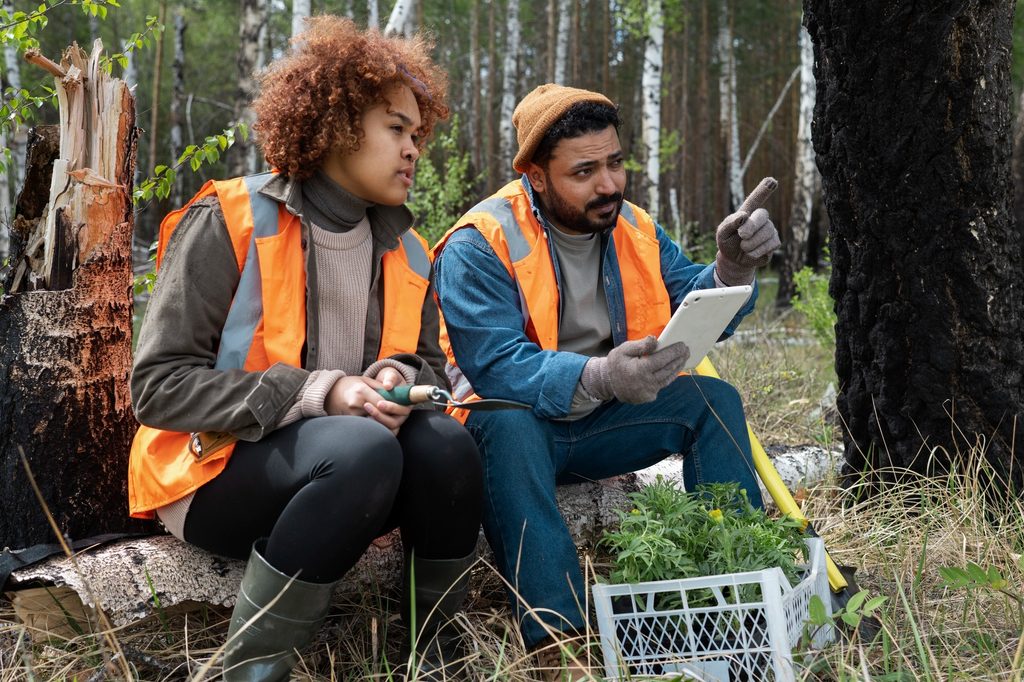
A strong research question names a site, a comparison, and a measurable variable; is feasible within school-investigation constraints; and links the variable to at least one ESS topic concept. Grounding it in a site or contrast justified by your own observations or local access also serves Criterion A—answering “why this place, why this comparison, why this variable” through deliberate design choices signals ownership more convincingly than adding extra variables does. More variables don’t earn more marks. For the dataset to support upper-band processing, build in an explicit contrast between conditions, take multiple readings per condition so variability is measurable rather than assumed, and run a pilot first: if early readings cluster near-identically, adjust the contrast or resolution before full collection. Record instrument precision on the day so later evaluation can state how limitations bias results directionally rather than generically.
The discipline that most reliably separates a processing-ready investigation from one that stalls is scope control. One main outcome variable and one main explanatory contrast—not three of each—keeps the analysis deep rather than broad and gives the processing stage something to work with. A short pilot run is the practical mechanism for enforcing that discipline: if the early measurements cluster so tightly that no real difference is visible across conditions, the contrast is too narrow or the measurement resolution is too coarse. Adjust before full collection, not after. A design that clears those tests doesn’t just make the data easier to handle—it puts mechanism-based analytical claims, and the uncertainty-aware evaluation that supports them, squarely within reach.
Analysis and Evaluation — Where Upper-Band Marks Are Won or Lost
Graphs and means are baseline expectations under Criterion C, not differentiators. Top-band processing involves mathematical treatment that changes what the data mean: rates, ratios, normalized values, or statistics beyond the mean. A practitioner example makes this concrete: a soil moisture investigation that calculates standard deviations across replicate readings and interprets the spread as evidence of soil heterogeneity is doing genuine processing; simply listing site averages without further treatment is not. Description is not evidence. Examiners distinguish between students who present data and those who turn data into evidence—and that gap, between a results section and an analytical argument, is precisely what the analysis section is asked to close.
The same standard applies to the analysis section itself. Reporting that a measured variable changed is not the same as explaining which feedback mechanism, limiting factor, or system interaction accounts for the direction and magnitude of that change. Context isn’t analysis. Mechanism is. The relevant ESS or systems concept should function as an explanatory instrument in the analysis paragraphs—as the mechanism that accounts for the data pattern—not as background context introduced before the data appear and then set aside once the results are described.
Evaluation reaches the upper band when limitations carry analytical weight, not just acknowledgment. Generic improvement notes—“more replicates would improve reliability,” offered without further specification—don’t meet the standard because they tell an examiner nothing about the actual investigation. What distinguishes high-quality evaluation is that each limitation is tied to a direction (does the bias inflate, deflate, or add noise to the measured difference?), a rough magnitude drawn from instrument uncertainty or replicate spread, and a specific consequence for a named conclusion. The question isn’t whether something could have been done better in the abstract; it’s whether the imperfection changes the sign of the trend or only its precision, and which claim is most exposed. One feasible correction per limitation—more replicates at the most variable site, tighter site-matching, a calibration step, standardized timing—closes the evaluation by showing what would change and why it matters.
The Collaborative Data Provision — What Is Permitted and Where the Individual Boundary Sits
Those analysis and evaluation standards apply to each student’s individual work, which makes the collaborative fieldwork question worth addressing directly: what can be done as a group, and what must remain individual? Many ESS teachers organize fieldwork around shared sites or common datasets—a practical arrangement that works fine, provided the boundary between joint data collection and individual intellectual work is drawn clearly. The specific rules around what may be shared, how to acknowledge it, and what must be completed individually are set by IB regulations and your school; confirm the approach with your supervisor against the official subject guide before collecting anything.
Within those boundaries, practitioner guidance on Personal Engagement emphasizes that examiners look for authentic personal framing, independent choices in how the question is scoped and justified, and the student’s own analytical perspective on the data. Working with classmates on measurements does not, by itself, demonstrate or undermine any of those three things; what matters is how clearly your report shows your own thinking. Focus your effort on framing a question that arises from your own observations or access, justifying the design in your own terms, and applying ESS concepts independently in analysis and evaluation, while following your school’s rules on collaboration and academic integrity.
Workflow and Planning Sequence for the ESS Investigation
The following sequence maps the key planning and drafting moments where IA performance is effectively decided—from locking the research question to the final markband audit. These checkpoints are diagnostic, not guarantees.
- Lock the research question — Checkpoint: Does the question name a site, a comparison, and a measurable variable clearly enough that a stranger could picture the dataset? Does it feel owned rather than borrowed, with a justification grounded in direct observation or local access?
- Map the ESS systems concept before fieldwork — Write two or three mechanism claims you expect the measurements to test; this is not a background paragraph but the explanatory framework you will use in analysis.
- Pilot sampling — Checkpoint: Did you get measurable variation, workable timing and logistics, and recordable uncertainty limits? If not, adjust the contrast, variable, or measurement resolution now—not after full collection.
- Full data collection — Checkpoint: Do you have replication (multiple readings per condition or site) and a real comparison or gradient? Single readings per location are not sufficient to show variability. If collaborating, keep your research question framing and all written work individual, and cite shared data clearly.
- Processing and analysis draft — Checkpoint: Have you applied at least one processing step that changes what the data mean—variability, normalization, a rate or ratio—and then explained major patterns using the named systems concept as a mechanism, not as background context?
- Evaluation and final markband audit — Checkpoint: For each key limitation, have you stated direction of bias, a bounded size estimate, the impact on a specific conclusion, and one feasible correction? Run a final read against the markband language while there is still time to revise; with the IA accounting for 25% of the final grade and grade-boundary exposure concentrated at the top of the scale, disciplined use of this sequence is the most direct way to protect the investigation’s final grade.
