
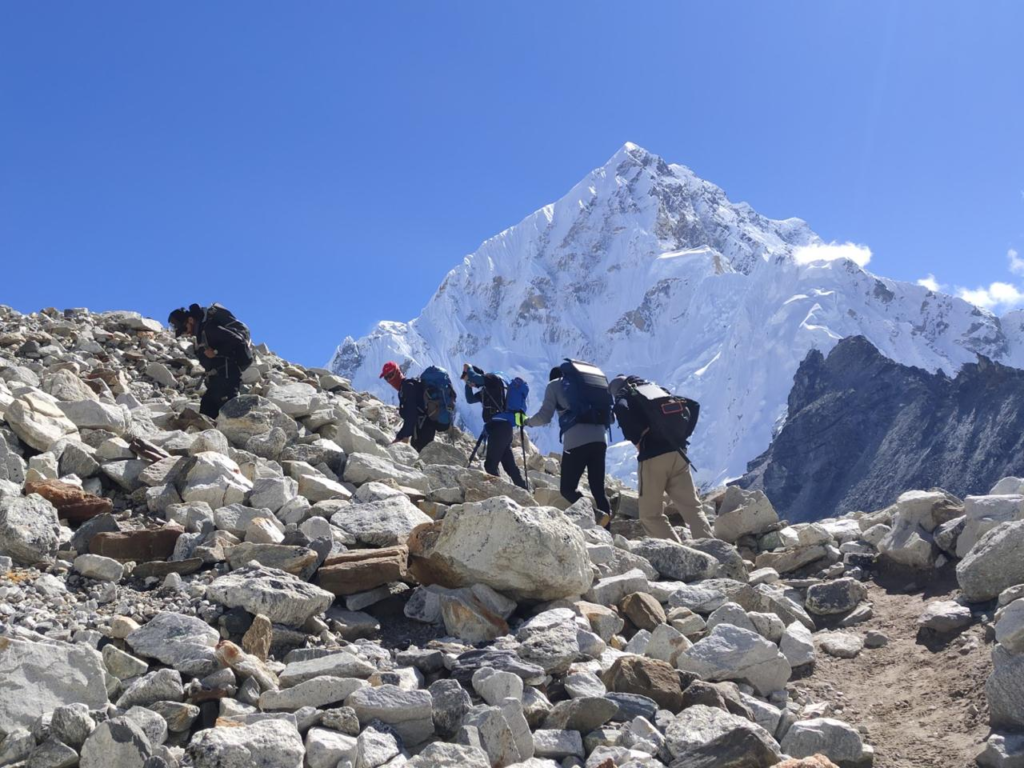
The Everest Base Camp (EBC) trek is an adventure of a lifetime, but the experience varies significantly depending on the season.
From crystal-clear mountain views in autumn to snow-covered landscapes in winter, each season offers something unique. Understanding the weather conditions, visibility, and crowd levels can help trekkers choose the best time for their journey.
Spring (March to May) – Blooming Trails and Mild Temperatures
Spring is one of the most popular seasons for trekking to Everest Base Camp. The weather is mild, with daytime temperatures ranging from 10°C to 15°C at lower elevations and dropping below freezing at night in higher regions. The trails come alive with blooming rhododendrons, adding vibrant colors to the trek.
The views during spring are spectacular, with clear skies in the morning, though occasional clouds may form in the afternoon. The crowd level is high, as many trekkers choose this season for stable weather and comfortable conditions. Teahouses can be busy, especially in Namche Bazaar and Dingboche, so early bookings are recommended.
Autumn (September to November) – The Best Season for Clear Views
Autumn is the most popular and arguably the best season for the Everest Base Camp Trek. The monsoon rains clear the dust and haze, leaving the sky incredibly clear. This results in breathtaking mountain views, making it the ideal time for photography.
Daytime temperatures range from 10°C to 20°C at lower elevations, while nights are colder, especially in places like Lobuche and Gorakshep, where temperatures can drop below -10°C. The trails are bustling with trekkers, creating a lively atmosphere in the villages.
For those seeking a luxurious and scenic experience, an Everest Base Camp trek with a helicopter return is an excellent option in autumn. The stable weather provides stunning aerial views of the Khumbu region, offering an unforgettable perspective of the Himalayas.
Winter (December to February) – A Cold but Peaceful Journey
Winter is the least crowded season for the Everest Base Camp trek. The temperature drops significantly, with daytime temperatures between -5°C and 10°C at lower altitudes, and at higher elevations, it can reach -20°C at night. Snowfall is common, especially around Lobuche, Gorakshep, and the base camp itself.
The biggest advantage of trekking in winter is the solitude. The trails are nearly empty, making it a great choice for those who prefer a quiet and peaceful trekking experience.
The skies are generally clear, providing excellent visibility of Everest, Ama Dablam, and other peaks. However, the extreme cold requires proper gear, including insulated clothing, warm boots, and high-quality sleeping bags.
Some teahouses at higher elevations may close due to harsh conditions, so planning with a guide or trekking company is recommended.
Summer/Monsoon (June to August) – A Rainy and Challenging Season
Summer coincides with the monsoon season, bringing heavy rainfall to the lower regions of the trek. The trails become muddy, and landslides can occur in certain areas. Leeches are common in the forests below Namche Bazaar. Despite these challenges, the upper Khumbu region, including Everest Base Camp itself, sees less rainfall due to its high altitude.
Clouds often obscure mountain views, but occasional clear mornings can still offer breathtaking sights. The trails are much quieter, making it suitable for those who don’t mind wet conditions and want to avoid crowds. Helicopter flights to Lukla are frequently delayed due to poor visibility, so trekkers should allow extra buffer days in their itinerary.
Conclusion
Each season offers a unique Everest Base Camp trekking experience. Autumn and spring are the best times for clear skies, great views, and moderate temperatures, while winter provides solitude and a snow-covered landscape.
Summer is the least favorable due to rain and reduced visibility, but it still attracts adventure seekers. Choosing the right season depends on individual preferences, fitness levels, and tolerance for cold or crowds. Regardless of the season, Everest Base Camp remains one of the most rewarding trekking destinations in the world.
